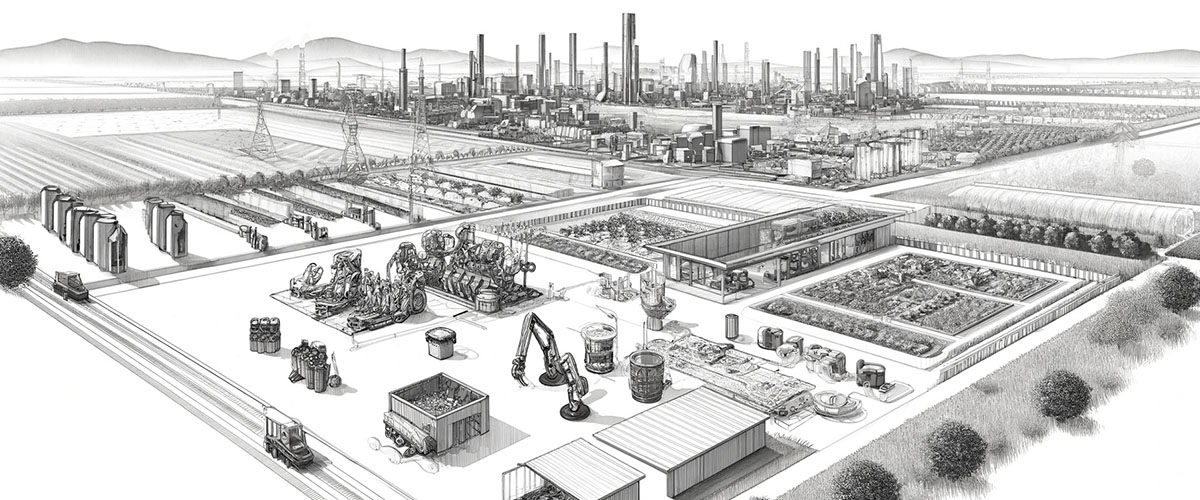
AI-Guided Robotic Sorting: Precision and Throughput
Automated sorting of construction and demolition waste (CDW) using robotic arms guided by computer vision and artificial intelligence represents a qualitative leap over conventional manual or mechanical sorting systems. Robotic classification systems — developed by companies such as ZenRobotics (Finland), AMP Robotics (USA), and Machinex (Canada) — employ multispectral cameras (visible, near-infrared, and SWIR) combined with convolutional neural networks trained on more than 500,000 images of CDW fractions to identify and classify concrete, wood, metals, plastics, gypsum, ceramics, and glass in real time. Classification accuracy reaches 95% with a throughput of 3,000-4,000 picks per hour per arm, compared to 400-600 picks/hour for manual sorting, according to verified data from ZenRobotics (2023).
The Veolia CDW treatment plant in Limay (France), equipped with 4 ZenRobotics Heavy Picker robots, processes 120,000 tonnes/year of mixed CDW, achieving a recovery rate of 92%, compared to 65% with the previous manual sorting configuration. The investment cost per robotic line ranges from 500,000 to 1,200,000 EUR, with payback periods of 2-4 years thanks to labor reduction (from 8-10 operators to 2-3 per shift) and the increased value of high-purity separated fractions. In Spain, the Waste Framework Directive (2008/98/EC), transposed by Law 7/2022, requires CDW to achieve a preparation for reuse or recycling rate of 70% by weight before 2025, a target that only advanced sorting technologies can meet in an economically viable manner across the 450 CDW treatment plants registered nationwide (PEMAR, 2023).
3D Printing with Recycled Materials and Circular Additive Manufacturing
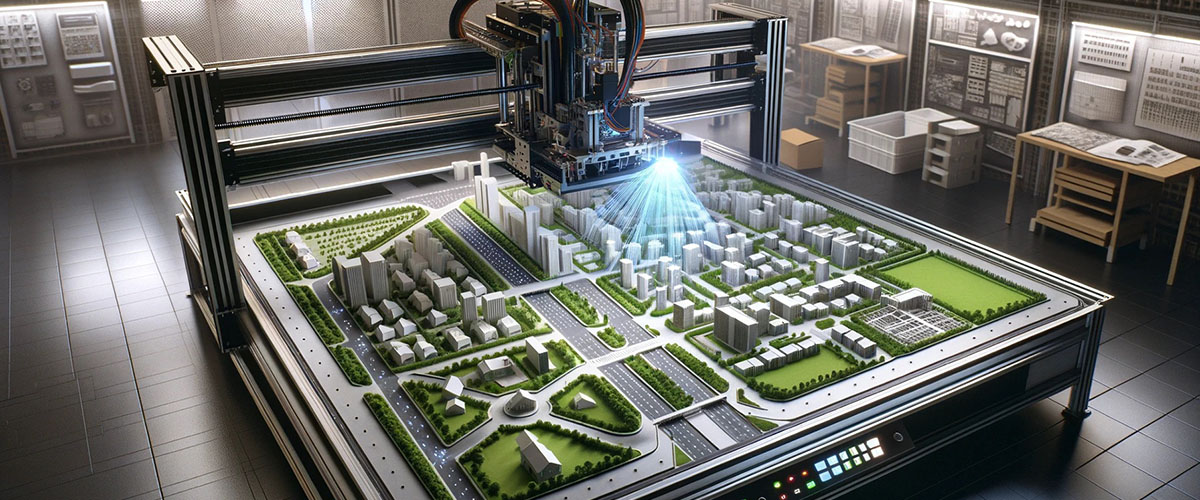
Large-scale additive manufacturing (3D concrete printing) has evolved from a laboratory prototype to a commercial construction technology, with more than 100 habitable structures printed worldwide by 2024 (Buswell et al., 2022). Incorporating recycled materials into printing mixes expands its circularity potential: research at the Eindhoven University of Technology (TU/e) has demonstrated the feasibility of 3D printing mortars that replace up to 50% of Portland cement with fly ash (a thermal power plant by-product), blast furnace slag, or recycled glass powder, while maintaining compressive strengths of 30-45 MPa at 28 days and rheological properties suitable for continuous extrusion.
The COBOD BOD2 project (Danish printer, 12 x 45 m gantry, printing speed of 1 m/s) has built dwellings of 80-160 m2 with a 60% reduction in on-site waste generation and a 40% reduction in construction time compared to conventional methods. The Spanish company Hyperion Robotics (Barcelona) has developed printing mixes with 30% recycled aggregate from CDW and 15% cement replacement with metakaolin, achieving strengths of 35 MPa. The current cost of 3D concrete printing stands at 800-1,200 EUR/m2 of built area for housing projects, compared to 900-1,400 EUR/m2 for conventional construction in Spain (CNC, 2023), confirming the emerging economic competitiveness of this technology when recycled materials are combined with the elimination of formwork and reduced labor requirements.
Mineral Carbonation and CO2 Capture in Concrete Waste
Accelerated carbonation of concrete waste — a process whereby CO2 reacts with calcium hydroxide and calcium silicates in crushed concrete to form stable calcium carbonate — transforms both a waste stream and a greenhouse gas into a construction resource with a negative carbon footprint. The technology developed by CarbonCure (Canada) injects liquid CO2 directly into fresh concrete during mixing, storing 15-25 kg of CO2 per m3 of concrete produced and improving compressive strength by 5-10% through the formation of CaCO3 nanocrystals that act as nucleation points. By 2024, CarbonCure has been installed in more than 750 concrete plants across 30 countries, avoiding cumulative emissions of 250,000 tonnes of CO2.
The Swiss startup Neustark has developed a carbonation process for recycled concrete aggregates that stores 50-100 kg of CO2 per tonne of treated aggregate, using CO2 captured from biogas plants or waste incinerators. The resulting carbonated aggregates meet the specifications of standard EN 12620 for use in structural concrete and have been used in HOLCIM (Switzerland) projects with carbonated recycled aggregate contents of 30%, maintaining strengths of C30/37. At the regulatory level, the revision of standard EN 206:2024 has increased the maximum permitted percentage of recycled aggregate in structural concrete from 20 to 50% for exposure classes XC1-XC2, facilitating the adoption of these technologies. The combination of carbonation and concrete recycling has an estimated mitigation potential of 0.5-1.0 GtCO2/year globally (GCCA, 2023), equivalent to 1.5-3% of total anthropogenic emissions.
Digital Traceability Platforms and Circular Economy on Site
Digital traceability of waste flows on construction sites is an increasingly important requirement for regulatory compliance and sustainable building certification. Platforms such as Madaster (Netherlands, launched in 2017) function as a materials passport: they record the identity, quantity, location, and residual value of each material incorporated into the building, creating a digital inventory that facilitates recovery at the end of its useful life. By 2024, Madaster has registered more than 600 buildings with a total inventoried materials value exceeding 8 billion EUR. The platform calculates a Material Circularity Indicator (MCI) — an Ellen MacArthur Foundation methodology — scoring from 0 (linear) to 1 (fully circular), with an average value of 0.45 for the registered stock.
In the field of on-site CDW management, applications such as PlanRadar and Waste Analytics (an Autodesk Construction Cloud module) enable the quantification, photographing, and classification of each waste container generated, linking it to the corresponding work chapter and EWC (European Waste Catalogue) code. Aggregated data from more than 2,000 projects monitored by PlanRadar across Europe indicate an average CDW generation rate of 120-180 kg/m2 for new construction and 300-500 kg/m2 for demolition, with on-site recovery potentials of 40-60% through concrete crushing for sub-bases and soil reuse. Law 7/2022 on waste and contaminated soils in Spain requires the preparation of a CDW management study for every project with a budget exceeding 75,000 EUR, identifying the expected fractions, recovery destinations, and cost estimates — a framework that digital platforms fulfill with greater precision and traceability than traditional manual documents.
References
- [1]3D Printing Using Concrete Extrusion: A Roadmap for ResearchCement and Concrete Research, 155, 106764.
- [2]ZenRobotics Heavy Picker — Technical Specifications and Performance DataZenRobotics Ltd, Helsinki.
- [3]CarbonCure Impact Report 2024: CO2 Mineralization in ConcreteCarbonCure Technologies Inc., Halifax.
- [4]Madaster Platform — Materials Passport and Circularity Indicator MethodologyMadaster Services BV, Arnhem.
- [5]Concrete Future: The GCCA 2050 Cement and Concrete Industry Roadmap for Net Zero ConcreteGCCA, London.
- [6]Plan Estatal Marco de Gestión de Residuos (PEMAR) — Actualización 2023MITERD, Madrid.


Comments 0
No comments yet. Be the first!
Leave a comment