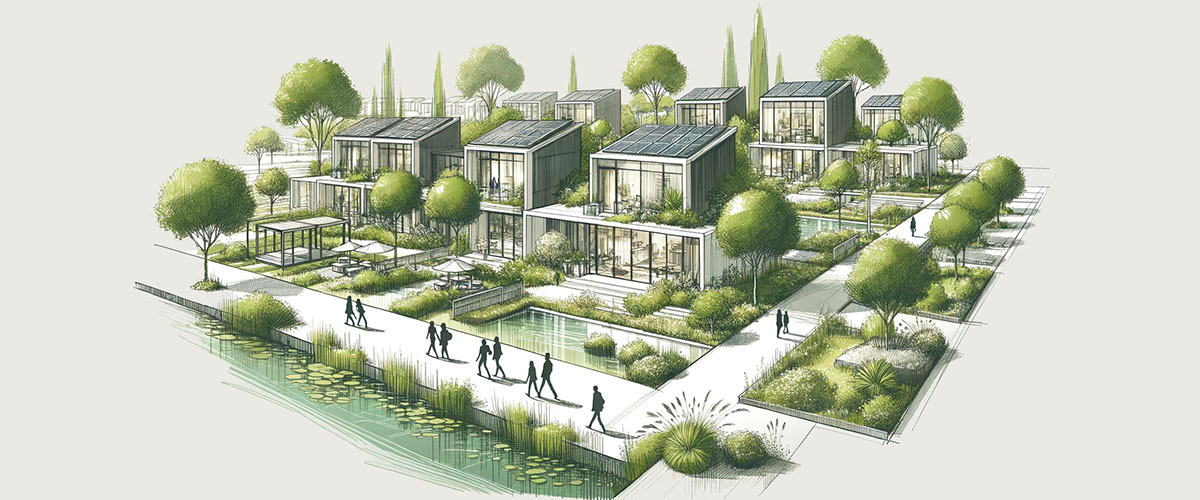
Definition and scope of green marketing in construction
Green marketing in the construction sector encompasses the commercialisation strategies for products, services, and projects that offer verifiable environmental benefits over their conventional alternatives. The American Marketing Association (AMA) defines green marketing as "the marketing of products that are presumed to be environmentally safe," but in the current regulatory context this definition has been tightened: the EU Directive 2024/825 on consumer empowerment for the green transition (known as the anti-greenwashing Directive, to be transposed by 27 March 2026) prohibits generic environmental claims ("eco", "green", "sustainable") without the backing of a recognised certification or verifiable scientific evidence. The global market for sustainable building materials reached 377,000 million USD in 2023, with a projection of 791,000 million USD by 2030, representing a compound annual growth rate of 11.6% (Grand View Research, 2024).
In Spain, the demand for green building products is driven by three quantifiable vectors: energy retrofitting (Component 2 of the Recovery Plan, with 6,820 million EUR in NextGenerationEU funds allocated to the renovation of 510,000 dwellings by 2026), building certifications (BREEAM Spain had certified 390 projects by 2023, covering 72,000 assessed dwellings, according to BREEAM ES data), and new sustainable construction regulated by the updated Technical Building Code (CTE DB-HE 2019), which requires a reduction in non-renewable primary energy consumption of 25-40% relative to the 2013 version. These three vectors generate specific marketing opportunities for materials manufacturers, property developers, builders, and design professionals.
Low environmental impact building materials
Sustainable building materials represent the broadest segment of green marketing in construction. Cross-laminated timber (CLT) has experienced 30% annual growth in European production volume between 2015 and 2023 (Stora Enso, 2024), reaching 3.5 million m³/year. CLT stores 0.9 tCO₂/m³ of biogenic carbon and has a global warming potential (GWP) of -718 kg CO₂eq/m³ (including sequestered carbon), compared to +350 kg CO₂eq/m³ for conventional reinforced concrete (EPD in accordance with EN 15804+A2). Natural insulation products made from wood fibre (thermal conductivity λ = 0.038-0.043 W/m·K), recycled cellulose (λ = 0.035-0.040 W/m·K), and hemp (λ = 0.040-0.046 W/m·K) compete technically with mineral wool (λ = 0.032-0.040 W/m·K) with the added advantage of a negative GWP due to carbon sequestration.
Low-carbon concretes replace between 30% and 70% of clinker with additions such as fly ash, ground granulated blast-furnace slag, or metakaolin, reducing emissions from 850 kg CO₂/tonne of ordinary Portland cement to 350-550 kg CO₂/tonne (Global Cement and Concrete Association, GCCA, 2023). Companies such as LafargeHolcim market ECOPact concretes with up to a 70% CO₂ reduction, available in strength classes of 25-55 MPa. Zero-VOC paints and finishes (volatile organic compounds) have grown from a niche to 38% of the market share in Western Europe in 2023, driven by indoor emissions regulations (French A+ class, German AgBB criteria). The Cradle to Cradle Certified (C2C) label, which evaluates material health, circularity, renewable energy, water stewardship, and social fairness, has certified more than 700 building products at its Gold or Platinum level, providing a verifiable sales argument for manufacturers and distributors.
Energy certifications and green labels as a commercial product
Sustainable building certifications have become a marketing product in their own right, generating quantifiable differentiation in the property market. Buildings with LEED Gold or Platinum certification command sale premiums of 9-16% and rental premiums of 6-12% over uncertified buildings (CoStar Group, 2019). In Spain, BREEAM leads the certification market with 390 assessed projects; a dwelling with a BREEAM Excellent or Outstanding rating differentiates itself with verifiable data on consumption (40-60% lower than the average building stock), indoor air quality (CO₂ < 800 ppm), acoustic comfort (airborne sound insulation DnT,A ≥ 55 dB), and water management (40% reduction versus baseline consumption). The cost of a BREEAM assessment for a residential project ranges from 15,000 to 45,000 EUR depending on size, representing less than 0.3% of the construction budget.
The energy performance certificate (EPC), mandatory in Spain since 2013 for the sale and rental of properties (RD 235/2013, updated by RD 390/2021), is the most widespread green marketing tool: more than 14 million certificates have been issued since its implementation (IDAE, 2024). Dwellings with a rating of A command an average price 12.8% higher than those rated G in the same market, according to a study of 1.2 million transactions (Idealista Data, 2023). The Passivhaus label (heating demand ≤ 15 kWh/m²·year, airtightness n50 ≤ 0.6 air changes/hour) and VERDE (GBCe Spain) complement the certification offering. The Passivhaus Building Platform (PEP) records 368 certified buildings in Spain as of December 2024, compared to 47 in 2018, evidencing an annual growth rate of 41%. Each certification provides the developer with a distinct commercial argument: Passivhaus appeals to comfort and extreme energy savings; BREEAM to holistic sustainability; LEED to international recognition.
Retrofit services and consultancy as a green product
The energy retrofitting of existing buildings has created a market for specialised services that constitutes a green marketing product with growing demand. Spain's residential stock comprises 25.7 million dwellings (INE Census, 2021), of which 81% were built before 2006 (prior to the CTE) and 55% before 1980 (without any thermal regulations). A deep retrofit (demand reduction ≥ 60%) of a typical 90 m² dwelling in climate zone D3 (Madrid) costs between 15,000 and 35,000 EUR and includes external wall insulation (ETICS, 80-120 EUR/m²), window replacement (PVC or thermal-break aluminium frames with low-emissivity glazing, 350-600 EUR/m²), installation of an air-source heat pump (3,500-6,000 EUR), and a mechanical ventilation system with heat recovery (2,500-4,500 EUR). NextGenerationEU programme subsidies cover between 40% and 80% of the investment depending on the energy rating improvement achieved.
Energy service companies (ESCOs) offer a business model particularly well-suited to green marketing: they finance the retrofit from future energy savings, eliminating the upfront investment barrier. In Spain, more than 120 ESCOs are registered with IDAE, with an estimated annual turnover of 650 million EUR/year (ANESE, 2023). Sustainability consultancy for property developers — which includes energy simulation (DesignBuilder, HULC), life cycle assessment (OneClick LCA, OpenLCA), certification advisory, and green communication strategy — charges between 8,000 and 25,000 EUR per average residential development (50-100 dwellings). The return for the developer materialises as sale premiums of 5-15%, marketing periods 20-30% shorter, and access to green finance (green mortgages with 0.10-0.30 percentage point lower spreads, offered by institutions such as CaixaBank, Triodos Bank, and ING). Green marketing in construction, when grounded in verifiable data and recognised certifications, transforms sustainability from an additional cost into a measurable competitive advantage.
References
- [1]Green Building Materials Market Size, Share & Trends Analysis Report, 2024-2030Grand View Research.
- [2]The Impact of Green Certifications on Office Occupancy RatesCoStar Analytics.
- [3]Concrete Future: The GCCA 2050 Cement and Concrete Industry Roadmap for Net Zero ConcreteGCCA.
- [4]Carbon and material footprints of a welfare state: Why and how governments should enhance the use of wood productsEnvironmental Science & Policy, 78, 157-166.
- [5]Informe estadístico de certificación energética de edificios en EspañaMinisterio para la Transición Ecológica.


Comments 0
No comments yet. Be the first!
Leave a comment