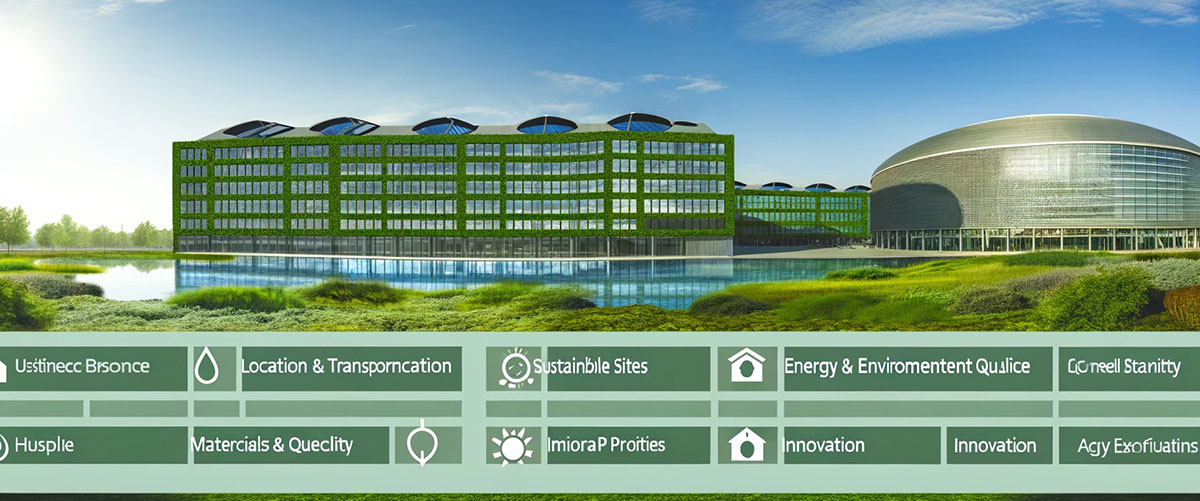
Scale of the Problem: Why Construction Must Be Sustainable
The construction sector and building operations consume 36% of global final energy and generate 37% of energy-related CO₂ emissions, according to the Global Status Report for Buildings and Construction 2022 by the Global Alliance for Buildings and Construction (GlobalABC/UNEP). Cement production alone accounts for approximately 8% of global CO₂ emissions (Chatham House, 2018), with annual production reaching 4.1 billion tonnes. Structural steel contributes another 7-9% of the global total.
Additionally, buildings consume 50% of all materials extracted from the Earth's crust and generate 35% of solid waste in the EU (Eurostat, 2020). Sustainable construction emerges as a technical response to this reality—not an ideological choice but a quantifiable necessity.
Historical Origins of the Movement
The concept of sustainable construction has roots in the 1973 energy crisis, when the OPEC oil embargo quadrupled petroleum prices and exposed the energy dependency of buildings. In 1987, the Brundtland Report (Our Common Future, UN World Commission on Environment and Development) defined sustainable development as that which meets the needs of the present without compromising the ability of future generations.
The institutionalization of the movement accelerated in the 1990s: the Building Research Establishment (BRE) launched BREEAM in 1990, becoming the world's first green building certification system. In 1993, the U.S. Green Building Council (USGBC) was founded, publishing the first version of LEED in 1998. The World Green Building Council (WorldGBC) was also established in 1998 and now encompasses over 75 national Green Building Councils.
In Spain, the Código Técnico de la Edificación (CTE) of 2006, updated in 2019, established mandatory requirements for energy savings (DB-HE), healthiness (DB-HS), and noise protection (DB-HR) that aligned Spanish regulations with European directives on energy performance of buildings (EPBD 2010/31/EU, revised in 2024).
The Six Pillars of Sustainable Construction
Charles J. Kibert, in Sustainable Construction: Green Building Design and Delivery (Wiley, 5th ed., 2022, ISBN 978-1119706458), structures the discipline around six fundamental principles that coincide with certification system categories:
Energy Efficiency and Water Management
Reducing energy demand through passive strategies (insulation, orientation, thermal mass, natural ventilation) and active ones (high-efficiency HVAC, LED lighting, renewable integration). The Passivhaus standard sets a ceiling of 15 kWh/m²/year for heating and 15 kWh/m²/year for cooling. The European EPBD directive requires all new buildings to be nearly zero-energy buildings (nZEB) since 2021, with non-renewable primary energy consumption below 60-80 kWh/m²/year depending on climate zone.
2. Water Management
Minimizing potable water consumption through low-flow fixtures (faucets ≤ 6 L/min, toilets ≤ 4.5 L), rainwater harvesting systems, greywater reuse, and landscaping with native low-water-requirement species (xeriscaping). In Mediterranean climates, a rooftop rainwater collection system can cover 30% to 60% of a residential building's non-potable demand.
Materials and Indoor Environmental Quality
Prioritizing materials with low embodied carbon, recycled content, local sourcing (radius < 160 km), chain-of-custody certification (FSC/PEFC for timber), and verified Environmental Product Declarations (EPDs) per ISO 14025. Cross-laminated timber (CLT) has a carbon footprint of approximately 0.5 t CO₂/m³ compared to 2.0-2.5 t CO₂/m³ for conventional reinforced concrete, according to the Wood for Good Carbon Database.
4. Indoor Environmental Quality
Ensuring CO₂ concentrations below 1,000 ppm, limiting volatile organic compounds (VOCs) to under 500 μg/m³ (WHO guideline), maintaining air change rates compliant with EN 16798-1, and providing natural lighting in at least 55% of occupied area. A Harvard University study (Allen et al., 2016, DOI: 10.1289/ehp.1510037) demonstrated that occupants of well-ventilated buildings with low VOCs scored 61% higher on cognitive tests than those in conventional buildings.
Waste Management and Site Integration
Construction and demolition waste (CDW) represents 35% of total waste generated in the EU. Sustainable construction requires a management plan diverting at least 70% of CDW from landfill (target of Spain's Royal Decree 105/2008). Techniques such as prefabrication and modular construction reduce on-site waste by 50% to 90% compared to conventional construction.
6. Site Integration
Buildings must respond to local climate, preserve existing biodiversity, minimize urban heat island effect (through reflective or vegetated roofs and permeable pavements), and promote sustainable mobility. Urban density, proximity to public transit, and pedestrian accessibility are criteria evaluated across all certification systems.
Regulatory Framework and Certifications
The main certification systems worldwide are: LEED (over 180,000 projects in 185 countries, 110-point scale), BREEAM (over 600,000 certified buildings in 90 countries, percentage scale), Passivhaus (over 65,000 certified units, strictly energy-based criteria), WELL (focused on occupant health and well-being, 10 categories), DGNB (German system with life-cycle and socioeconomic focus), and Green Globes (North American alternative with online assessment).
At the regulatory level, the European Energy Performance of Buildings Directive (EPBD 2024) mandates that all new buildings must be zero-emission from 2028 (public buildings) and 2030 (all others). The Energy Performance Certificate, mandatory in the EU since 2013, classifies buildings from A (most efficient) to G, with class A corresponding to non-renewable primary energy consumption below 40 kWh/m²/year in climate zone D3 (Madrid).
References
- [1]Global Status Report for Buildings and Construction 2022United Nations Environment Programme.
- [2]Sustainable Construction: Green Building Design and Delivery (5th ed.)Wiley. ISBN: 978-1119706458
- [3]Our Common Future (Brundtland Report)Oxford University Press. ISBN: 978-0192820808
- [4]Making Concrete Change: Innovation in Low-carbon Cement and ConcreteThe Royal Institute of International Affairs.
- [5]Associations of Cognitive Function Scores with Carbon Dioxide, Ventilation, and Volatile Organic Compound Exposures in Office WorkersEnvironmental Health Perspectives, 124(6), 805-812.
- [6]Directive (EU) 2024/1275 on the energy performance of buildings (recast)Official Journal of the European Union.
Comments 0
No comments yet. Be the first!
Leave a comment