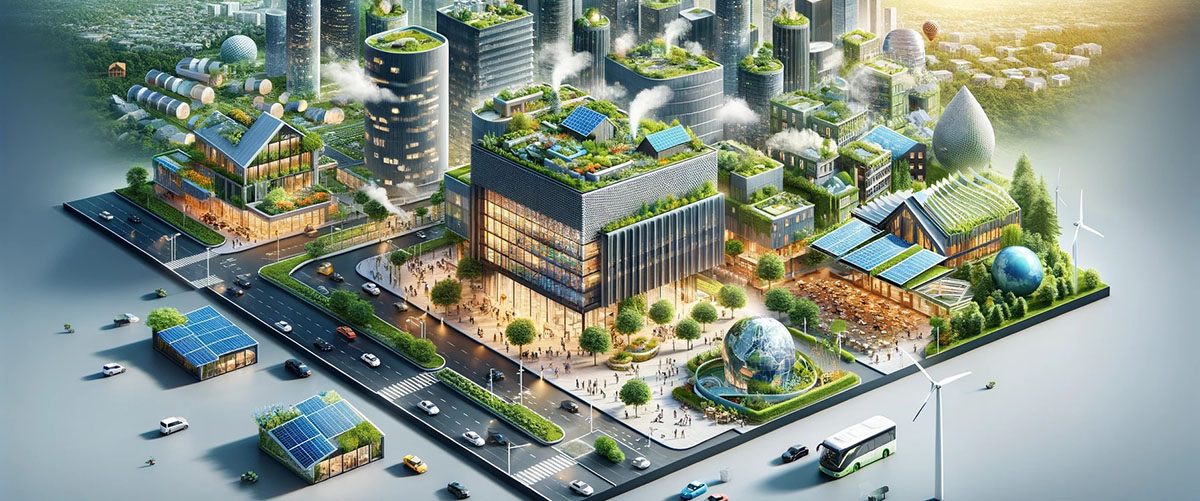
Origin and structure of the 2030 Agenda
The 2030 Agenda for Sustainable Development was adopted on 25 September 2015 through Resolution A/RES/70/1 of the United Nations General Assembly, with the affirmative vote of all 193 Member States. The document establishes 17 Sustainable Development Goals (SDGs) broken down into 169 targets and monitored through 231 unique indicators defined by the UN Statistical Commission (2020 revision). The Agenda succeeds the Millennium Development Goals (MDGs, 2000-2015), expanding the scope from 8 objectives focused on developing countries to a universal framework encompassing the economic, social, and environmental dimensions. Global follow-up falls under the High-Level Political Forum (HLPF), which since 2016 has received more than 300 Voluntary National Reviews (VNRs). The 2023 progress report by the Secretary-General warns that only 15% of the targets are on track for fulfilment, 48% show insufficient progress, and 37% have stagnated or regressed relative to the 2015 baseline.
The construction and building sector constitutes a cross-cutting pillar of the 2030 Agenda. According to the UNEP Global Status Report for Buildings and Construction (2022), buildings account for 36% of global final energy consumption and 37% of energy-related CO₂ emissions. The cement industry alone emits 2.4 billion tonnes of CO₂ annually (approximately 7% of the global total). These figures position construction as the sector with the greatest potential for climate mitigation: the International Energy Agency (IEA) estimates that energy efficiency in buildings could prevent 12 GtCO₂ cumulative emissions between 2020 and 2030 through deep retrofits, high-performance envelopes, and electrification of heating. The 2030 Agenda provides the political-institutional framework that connects these technical interventions with national emission reduction commitments under the Paris Agreement.
SDGs directly linked to the construction sector
SDG 7 (Ensure access to affordable, reliable, sustainable, and modern energy) sets target 7.3 to double the global rate of improvement in energy efficiency, from the 1.3% annual rate recorded in 2015 to 2.6% annually. In building, this translates into reducing the average energy intensity from 170 kWh/m²·year (global residential average, IEA 2022) to 100 kWh/m²·year or less. SDG 9 (Industry, innovation, and infrastructure) drives target 9.4: modernising infrastructure with clean technologies, which in construction entails the adoption of BIM (Building Information Modeling), prefabrication with waste reductions of 52% (Jaillon and Poon, 2014), and low-carbon materials such as concretes with 50-70% clinker substitution by slag or fly ash (emission reductions of 30-45% per cubic metre). SDG 11 (Sustainable cities and communities) sets target 11.1 to ensure access to adequate housing for all by 2030; according to UN-Habitat, 1.6 billion people lack adequate housing and 1 billion live in informal settlements.
SDG 12 (Responsible consumption and production) addresses target 12.2 on sustainable management and efficient use of natural resources. Construction and demolition generate 374 million tonnes of waste annually in the EU-27 alone (Eurostat, 2022), representing 35% of total waste. The Waste Framework Directive (2008/98/EC) requires a recovery rate of 70% by weight by 2020, a target achieved by 18 out of 27 Member States. SDG 13 (Climate action) connects directly with the decarbonisation of the building stock: the EU has committed to reducing emissions by 55% by 2030 relative to 1990 (Fit for 55 package), and the recast Energy Performance of Buildings Directive (EPBD) of 2024 requires all new buildings to be zero-emission from 2030 onwards. These five SDGs configure the framework of quantifiable obligations that the construction sector must integrate into its strategic planning, design processes, and supply chains to contribute effectively to the 2030 Agenda.
Monitoring indicators and current state of the sector
Tracking construction's impact on the 2030 Agenda requires sector-specific indicators beyond the UN's 231 global indicators. The Global Alliance for Buildings and Construction (GlobalABC), coordinated by UNEP, has developed a framework of 18 sector-specific indicators grouped into four areas: direct and indirect building emissions (key indicator: 10 GtCO₂/year in 2022, 1% above 2015), energy intensity (kWh/m² by typology and climate zone), investment in energy efficiency (237 billion USD in 2022, 16% higher than 2021 but 40% below the trajectory needed for 2030), and energy renovation rate of the existing stock (1% annually in the EU versus the 3% required according to the European Commission). At the national level, Spain has the Action Plan for the Implementation of the 2030 Agenda, approved in 2018, with 9 priority areas and 55 lines of action, although the latest progress report (2023) acknowledges overall advancement of only 42% on targets with territorial impact.
Sector data reveal a gap between commitment and execution. The rate of deep energy renovation (demand reduction ≥ 60%) in the EU remains at 0.2% annually of the existing stock, when the Renovation Wave Strategy (2020) set the objective of doubling the overall rate to 2% annually and reaching 35 million renovated buildings by 2030. In Spain, the residential stock comprises 25.7 million dwellings (INE, 2021), of which 55% were built before 1980 (without thermal regulations) and 81% before 2006 (prior to the CTE). The PNIEC (National Integrated Energy and Climate Plan 2021-2030) envisages the energy retrofit of 1,200,000 dwellings over the decade, with an associated investment of 12.3 billion euros partially sourced from NextGenerationEU funds (6.82 billion allocated to housing and urban regeneration component 2). Meeting these targets is a necessary condition for Spain to achieve the building-related targets of the 2030 Agenda.
Market opportunities and green marketing aligned with the SDGs
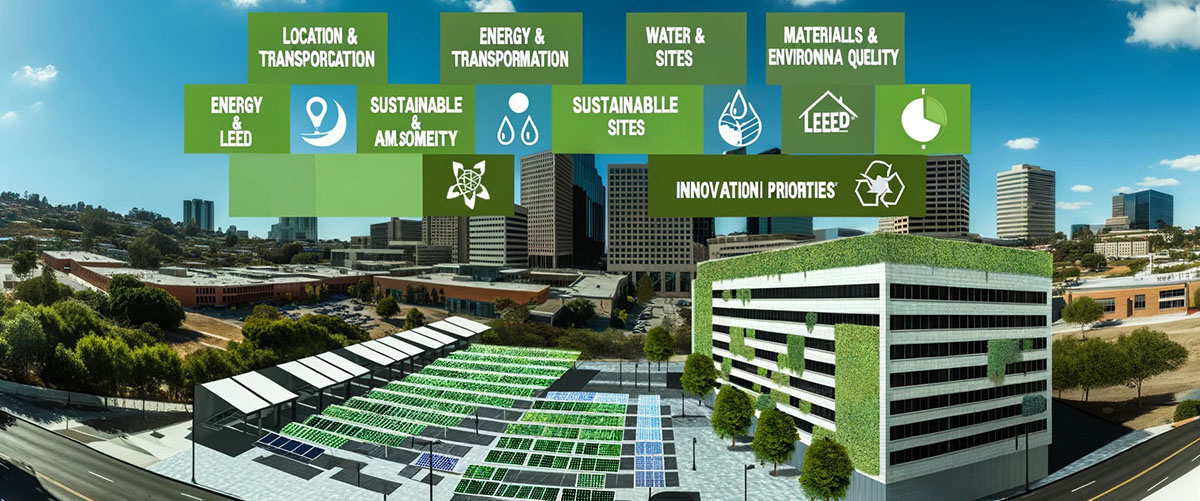
The 2030 Agenda has generated a communication and brand positioning framework that construction companies can legitimately leverage. The Accenture and UN Global Compact study (2023) indicates that 72% of CEOs in the construction sector consider the SDGs relevant to their corporate strategy, and 48% integrate them into their ESG (Environmental, Social, and Governance) reporting. Sustainable building certifications (LEED, BREEAM, VERDE) incorporate credits explicitly linked to the SDGs: BREEAM International 2016 maps its 10 categories against the 17 SDGs, and the BREEAM SDG Tracker tool quantifies the contribution of each certified project. Buildings with LEED Platinum or BREEAM Outstanding certification command rental premiums of 6-12% and sale premiums of 9-16% compared to equivalent uncertified buildings (JLL, 2022). The EU green taxonomy (Regulation 2020/852) reinforces this trend by classifying the construction and renovation of buildings with operational emissions ≤ 10% below the national nZEB threshold as environmentally sustainable economic activities.
Marketing communication aligned with the SDGs demands rigour to avoid greenwashing. The EU Directive on environmental claims (proposed 2023, expected adoption 2024-2025) prohibits generic sustainability claims ("environmentally friendly", "ecological", "green") without verifiable evidence and a certified methodology. Construction companies linking their activity to the SDGs must: (1) identify the SDGs material to their business through a double materiality analysis; (2) establish quantifiable indicators with a baseline and time-bound target; (3) report progress according to recognised frameworks (GRI Standards 2021, which include explicit SDG mapping for each indicator); and (4) submit the information to external verification (ISAE 3000/3410). The Global Reporting Initiative indicates that in 2023, 83% of the world's 250 largest companies report according to GRI, and 73% include SDG mapping. The 2030 Agenda, applied with rigour, transforms sustainability from an advertising argument into a strategic management tool with auditable metrics and quantifiable competitive advantages for the construction sector.
References
- [1]Transformar nuestro mundo: la Agenda 2030 para el Desarrollo Sostenible (A/RES/70/1)Asamblea General de las Naciones Unidas.
- [2]2022 Global Status Report for Buildings and ConstructionUnited Nations Environment Programme. ISBN: 978-92-807-3984-8
- [3]World Energy Outlook 2022IEA Publications. ISBN: 978-92-64-49568-1
- [4]Life cycle design and prefabrication in buildings: A review and case studies in Hong KongAutomation in Construction, 39, 195-202.
- [5]Decarbonising the Built Environment: A Building-Level FrameworkJLL Research.
- [6]GRI Universal Standards 2021GRI.
Comments 0
No comments yet. Be the first!
Leave a comment