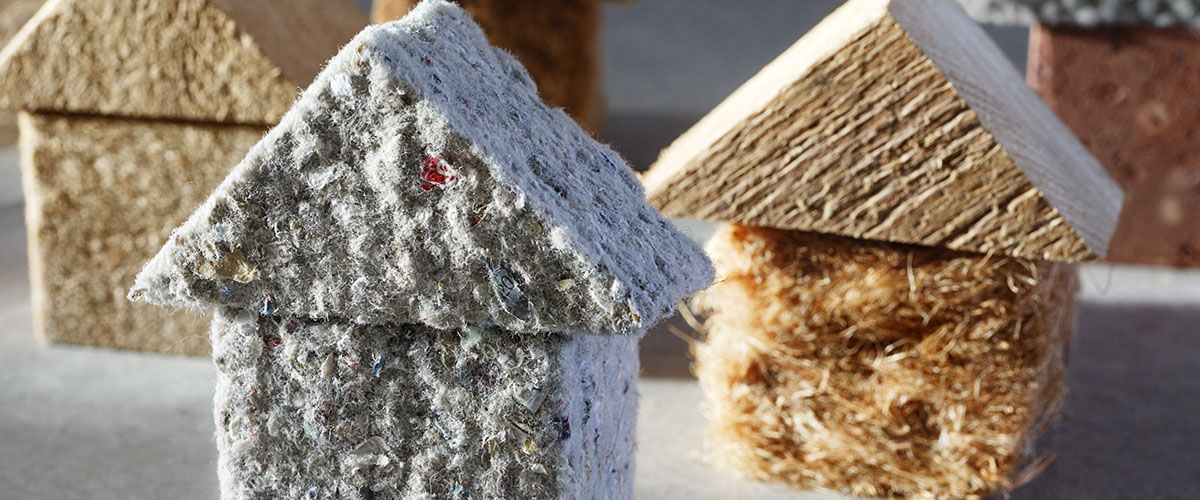
Technical definition and scope of energy efficiency in buildings
What we call energy efficiency in buildings is the relationship between the energy service provided — thermal comfort (20-26°C), indoor air quality (< 1,000 ppm CO2), adequate lighting (300-500 lux depending on use) and domestic hot water (45-60°C) — and the primary energy consumed to achieve it. A building is energy-efficient when it provides these services with primary energy consumption significantly below the average of the comparable building stock. In the European Union, the average final energy consumption in residential buildings is 170 kWh/m2/year (EU Building Stock Observatory, 2022), while an efficient building complying with the nZEB (nearly Zero Energy Building) standard under the EPBD consumes between 30 and 60 kWh/m2/year, and a Passivhaus building stays below 15 kWh/m2/year in heating demand and 120 kWh/m2/year in total primary energy — reductions of 70-90% compared to the average.
Energy efficiency is measured through specific indicators set out in European and national legislation: energy demand (kWh/m2/year, the energy the building theoretically needs to maintain comfort conditions, determined by envelope quality), final energy consumption (kWh/m2/year, energy delivered to the building — electricity, gas, biomass — which also depends on the efficiency of active systems), and primary energy consumption (kWh/m2/year, total energy including generation, transport and distribution losses, reflecting the true environmental impact). The CTE DB-HE (2019) establishes limit values for new construction in Spain: non-renewable primary energy consumption <= 28-40 kWh/m2/year (depending on climate zone) for residential use, values that position Spain among the EU countries with the most demanding regulatory requirements. The difference between what we call efficient today and what will be efficient tomorrow is a moving target that regulation updates every 5-10 years with increasingly stringent requirements.
The thermal envelope: the front line of energy efficiency
What we call energy efficiency begins with the building envelope — walls, roofs, floors, windows and doors — which is the barrier between the conditioned space and the outdoor environment. Thermal transmittance (U-value, in W/m2K) quantifies heat loss per unit of surface area: an uninsulated brick wall has U = 1.5-2.5 W/m2K, while a wall with 100-150 mm of mineral wool insulation achieves U = 0.20-0.35 W/m2K — between 5 and 10 times less heat loss. Windows are the weak point of the envelope: a single-glazed window with a non-thermally-broken aluminium frame has U = 5.0-5.7 W/m2K, while a triple-glazed window with argon gas fill and PVC or timber frame achieves U = 0.7-1.1 W/m2K. The Passivhaus standard requires U <= 0.80 W/m2K for windows, which implies double or triple low-emissivity glazing with warm edge spacers (which reduce the perimeter thermal bridge of the glazing by 60-70%).
Airtightness is the second pillar of an efficient envelope. Conventional buildings have air infiltration rates of 4-10 air changes/hour at 50 Pascal (Blower Door test result), while a Passivhaus building requires n50 <= 0.6 air changes/hour — between 7 and 17 times more airtight. This airtightness eliminates uncontrolled infiltrations that account for 25% to 50% of heat losses in existing buildings (LBNL, Lawrence Berkeley National Laboratory, 2019), but necessitates the installation of mechanical ventilation with heat recovery (MVHR) to ensure indoor air quality. High-efficiency heat recovery units achieve recovery rates of 85-95% (for every 100 W of heat in the extract air, 85-95 W are transferred to the supply air), enabling ventilation with no significant energy loss and with filtration of outdoor air (PM2.5 particles, pollen, dust) that improves indoor air quality compared to natural ventilation through window opening.
Efficient active systems: HVAC, lighting and controls
What we call energy efficiency in active systems is measured by their performance or coefficient of performance. In HVAC, the COP (Coefficient of Performance) of air-source heat pumps for heating reaches values of 3.0-5.5 (seasonal average SCOP per EN 14825), meaning they generate 3-5.5 kWh of thermal energy for every 1 kWh of electricity consumed — compared to gas condensing boilers with efficiencies of 95-109% on GCV (i.e. 0.95-1.09 kWh of heat per 1 kWh of gas). In cooling, the EER (Energy Efficiency Ratio) of high-efficiency equipment exceeds 5.0 (energy class A+++ under the European label), with consumption of 10-20 kWh/m2/year for cooling in Mediterranean climates versus 30-60 kWh/m2/year with average-efficiency equipment. The ErP (Energy related Products, 2018) regulation sets increasingly stringent minimum efficiency requirements that have removed from the European market HVAC equipment with COP below 2.5.
In lighting, the transition from incandescent technology (10-15 lm/W) to fluorescent (50-80 lm/W) and then to LED (100-200 lm/W) has multiplied luminous efficacy by 10-15 times in two decades, reducing lighting energy consumption in buildings from 20-30% of total electricity consumption to 5-10% with LED lighting and occupancy detection plus luminous flux regulation (dimming) controls. Building Management Systems (BMS) integrate the control of HVAC, lighting, ventilation and solar shading into a centralised platform that optimises overall consumption. According to a study by the IEA (2019), advanced BMS with predictive control strategies reduce total building energy consumption by 10-20% compared to manual management or simple thermostats, with investments of 15-30 EUR/m2 and payback periods of 3-7 years. Energy efficiency is not a static quality of a building but the result of the interaction between a high-performance envelope, high-efficiency active systems and intelligent management that continuously optimises them.
Regulatory frameworks and certification: quantifying what we call efficient
What we call energy efficiency is formalised in regulatory frameworks that establish mandatory minimums and voluntary labels that recognise excellence. The CTE DB-HE (Spain, 2019) sets the basic requirement for limiting energy consumption in new construction: non-renewable primary energy <= 28 kWh/m2/year (climate zone alpha) to 40 kWh/m2/year (zone E), total primary energy consumption <= 40-55 kWh/m2/year, and combined heating and cooling demand limited by climate zone. The energy performance certificate (mandatory for sale and rental since 2013 in Spain, under Royal Decree 235/2013) classifies buildings from A (most efficient) to G (least efficient): in Spain, 84% of certificates issued correspond to ratings E, F and G (MITERD, 2023), underscoring the massive inefficiency of the existing stock.
Voluntary energy excellence labels go beyond the regulatory minimum. The Passivhaus standard (Passivhaus Institut, Darmstadt, Germany) requires: heating demand <= 15 kWh/m2/year, cooling demand <= 15 kWh/m2/year (+ 4 kWh/m2/year for dehumidification in humid climates), total primary energy <= 120 kWh/m2/year, airtightness n50 <= 0.6 air changes/hour, and thermal comfort with no interior surface temperatures below 17°C. Worldwide, there are over 65,000 Passivhaus-certified buildings (iPHA, 2023). LEED v4.1 (USGBC) awards up to 33 points (out of 110 total) for energy efficiency, and BREEAM (BRE) dedicates its Energy category with up to 36 credits. These mandatory and voluntary frameworks define and quantify what we call energy efficiency, establishing a common language that enables building comparison, target setting and progress measurement toward decarbonisation of the building stock.
References
- [1]EU Building Stock Observatory Database: Energy Consumption and Performance IndicatorsEuropean Commission — DG Energy.
- [2]Documento Básico HE Ahorro de Energía — Código Técnico de la Edificación (CTE DB-HE 2019)Ministerio de Fomento, Gobierno de España.
- [3]Re-inventing air heating: Convenient and comfortable within the frame of the Passive House conceptEnergy and Buildings, 37(11), 1186-1203.
- [4]Infiltration and Ventilation in Residential Buildings: A Review of Measurement Techniques and Data SourcesLBNL, U.S. Department of Energy.
- [5]The Critical Role of Buildings — Perspectives for the Clean Energy TransitionInternational Energy Agency.
- [6]Informe sobre el estado de la certificación energética de los edificios en España — Datos estadísticos 2013-2023Ministerio para la Transición Ecológica y el Reto Demográfico.


Comments 0
No comments yet. Be the first!
Leave a comment