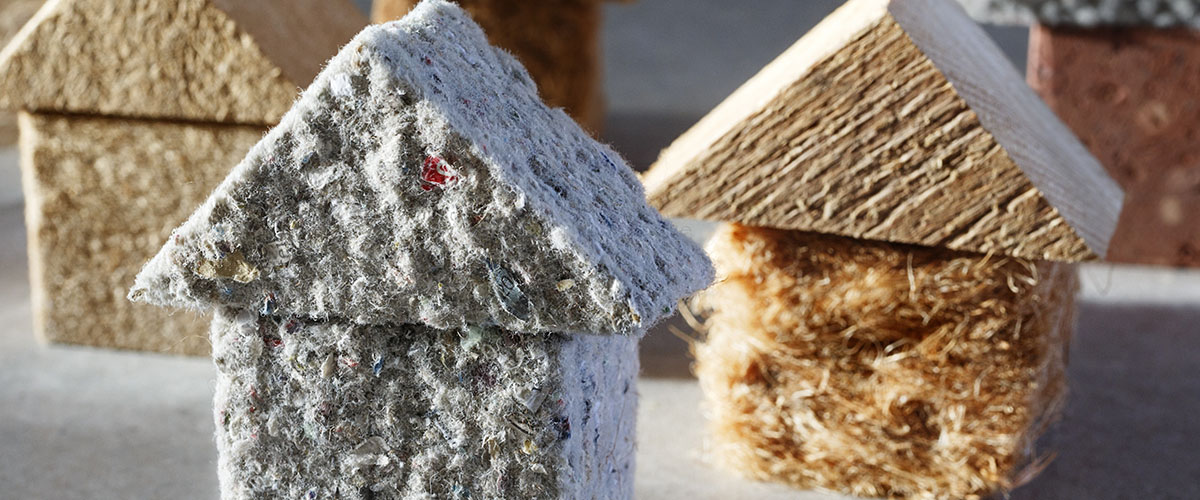
Fundamentals of thermal insulation in contemporary building
Thermal insulation techniques constitute the fundamental pillar of energy efficiency in buildings, extending well beyond simple protection against heat. According to the IDAE (Instituto para la Diversificación y Ahorro de la Energía, 2021), the thermal envelope is responsible for 50-70% of energy losses in residential buildings in Spain, where 80% of the building stock built before 1980 lacks code-compliant thermal insulation. The thermal conductivity (λ) of insulating materials determines their ability to resist heat flow: conventional insulation materials — mineral wool (λ = 0.032-0.040 W/m·K), expanded polystyrene EPS (λ = 0.031-0.038 W/m·K), extruded polystyrene XPS (λ = 0.029-0.036 W/m·K) and sprayed polyurethane PUR (λ = 0.022-0.028 W/m·K) — deliver well-established performance, while next-generation insulation materials such as aerogel (λ = 0.013-0.018 W/m·K) and vacuum insulation panels VIP (λ = 0.004-0.008 W/m·K) multiply thermal resistance in minimal thicknesses.
The Spanish Technical Building Code in its Basic Document HE1 (CTE DB-HE, 2019 update) establishes thermal transmittance (U-value) limits by climate zone: from U ≤ 0.41 W/m²·K for walls in zone A down to U ≤ 0.27 W/m²·K in zone E, requiring insulation thicknesses of 40-120 mm depending on the chosen material. The Passivhaus standard, the international benchmark for maximum efficiency, requires U ≤ 0.15 W/m²·K for the opaque envelope, which implies thicknesses of 200-350 mm of mineral wool or 150-250 mm of polyurethane. The difference between meeting minimum code requirements and achieving thermal excellence yields a 60-80% reduction in heating demand, with payback periods for the additional investment of 8-15 years depending on the climate zone and local energy costs, according to data from the EPISCOPE Project (2016).
External thermal insulation systems: ETICS and ventilated facades
The External Thermal Insulation Composite System (ETICS, known as SATE in Spanish terminology) wraps the building in a continuous layer of insulation bonded or mechanically fixed to the existing wall, eliminating linear thermal bridges at floor slab edges, columns and roller shutter boxes, which account for 20% to 35% of total envelope heat losses according to standard UNE-EN ISO 10211. A study by the IETcc-CSIC (2018) evaluated 120 ETICS retrofits across Spain and documented an average reduction in heating demand of 40-60%, using EPS thicknesses of 60-100 mm (installation cost: 45-80 €/m²) and a system service life exceeding 25 years with basic maintenance. The technical guide from ANFAPA (Asociación Nacional de Fabricantes de Morteros y SATE) reports that over 3.5 million m²/year of ETICS are installed in Spain, with 12-15% annual growth driven by Next Generation EU funding.
The ventilated facade adds a ventilated air cavity (30-80 mm) between the continuous insulation and the outer cladding (ceramic, stone, composite, wood). This cavity generates a chimney effect that evacuates heat absorbed by the outer leaf in summer, reducing cooling loads by 20-40% compared to conventional ETICS according to measurements by the Research Group in Architecture, Energy and Environment at UPC (2019). The cost of a ventilated facade ranges from 120-250 €/m² depending on the cladding material, with a payback period of 12-20 years when factoring in energy savings and property value appreciation. Thermal bridge elimination reaches 85-95% when the system incorporates thermal break connections in the substructure anchors, achieving overall transmittances of U = 0.18-0.28 W/m²·K that comfortably comply with the CTE and approach Passivhaus standards.
Interior insulation techniques and blown-in systems: retrofitting the existing stock
When external insulation is not feasible — listed buildings, party walls, facades with easements or planning restrictions affecting 30-40% of the Spanish building stock according to INE (2021) — interior insulation techniques and cavity injection offer effective alternatives. Blown cellulose, mineral wool or EPS beads injected into existing air cavities of double-leaf walls (the dominant construction system in Spain from 1960 to 2006, present in over 10 million dwellings) improve the wall's thermal resistance by 70-85% without interior or exterior works, at a cost of 12-25 €/m² and with execution times of 1-2 days per dwelling. Blown cellulose (λ = 0.038-0.042 W/m·K, installation density 45-65 kg/m³) completely fills the cavity, eliminating the internal convection currents that reduced the effectiveness of the original air gap.
Interior dry lining with plasterboard and integrated insulation (systems such as Knauf Insulation Combi-KP or URSA Combi-P) provides insulation thicknesses of 30-80 mm with transmittance improvements of 50-70% compared to the bare wall, at the expense of a loss of usable floor area of 50-100 mm per wall surface. For roofs, external insulation (inverted roof with XPS over the waterproofing membrane: 60-120 mm to comply with the CTE) or internal insulation (sprayed polyurethane foam on the underside of the slab: 40-80 mm) are the most common techniques. According to the IDAE (2020), roof insulation retrofits reduce heat losses through this surface by 60-75%, with an investment of 25-60 €/m² and a payback period of 5-10 years. Thermal insulation techniques applied to existing building stock retrofits represent the greatest national energy-saving opportunity, with an estimated potential of 35-50 TWh/year in demand reduction.
Advanced insulation materials and thermal bridge elimination
Advanced insulation materials solve situations where available thickness is limited. Vacuum insulation panels (VIP) achieve thermal conductivities of 0.004-0.008 W/m·K — between 5 and 8 times better than conventional insulation — in thicknesses of 15-40 mm, making them ideal for retrofitting floors, ceilings and party walls with dimensional constraints. Their cost (80-150 €/m²) is justified when the space has high economic value (city-centre offices: 200-500 €/m²/year in rent). Aerogel (λ = 0.013-0.018 W/m·K), available in flexible blankets (Aspen Aerogels Spaceloft: 10 mm thickness equivalent to 25-30 mm of mineral wool), enables insulation of singular junctions — window jambs, roller shutter boxes, floor slab edges — where conventional thicknesses simply cannot fit. Aspen Aerogels reported sales of 190 million USD in 2022, with 30% annual growth in the construction segment.
Thermal bridge elimination is the most cost-effective technique in new buildings, representing an additional cost of just 2-5% over the base envelope but improving overall efficiency by 15-25%. Key elements include: insulated roller shutter boxes (U ≤ 0.60 W/m²·K versus 2.5-5.0 W/m²·K for conventional boxes), window frames with thermal break (aluminium profiles with polyamide thermal break of 24-34 mm reducing frame transmittance to 1.4-2.2 W/m²·K compared to 5.7 W/m²·K for aluminium without thermal break), insulated structural connectors for balconies (Schöck Isokorb: 90% reduction in balcony thermal bridging), and ground floor slabs insulated with perimeter XPS of 50-100 mm. The combination of continuous high-quality insulation with systematic thermal bridge elimination is what distinguishes an energy-mediocre building from one that achieves heating demands below 15 kWh/m²·year as required by the Passivhaus standard.
References
- [1]Guía Técnica de Rehabilitación Energética de la Envolvente Térmica de los EdificiosInstituto para la Diversificación y Ahorro de la Energía, Ministerio para la Transición Ecológica.
- [2]Evaluación del comportamiento térmico de sistemas SATE en edificios rehabilitados en EspañaInstituto Eduardo Torroja de Ciencias de la Construcción — CSIC.
- [3]A model for the improvement of thermal bridges quantitative assessment by infrared thermographyApplied Energy, 211, 854-864.
- [4]EPISCOPE and TABULA: Energy Performance Indicator Tracking Schemes for the Continuous Optimisation of Refurbishment Processes in European Housing StocksInstitut Wohnen und Umwelt (IWU).
- [5]Aerogel insulation for building applications: A state-of-the-art reviewEnergy and Buildings, 43(4), 761-769.
- [6]Insulation materials for the building sector: A review and comparative analysisRenewable and Sustainable Energy Reviews, 62, 988-1011.

Comments 0
No comments yet. Be the first!
Leave a comment