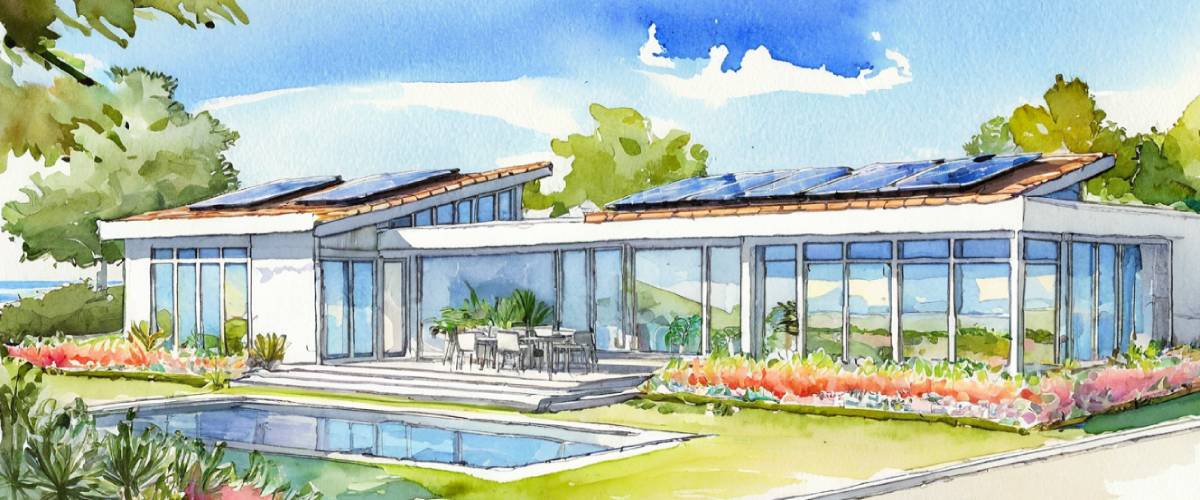
The shortage of qualified instructors in sustainable construction
The effective strategies for training instructors in green building address a critical shortage: demand for qualified professionals in sustainable construction is growing at 15-20% annually (WorldGBC, 2023), while training capacity expands at only 5-8% per year. Globally, the construction sector employs 220 million workers (ILO, 2022), of whom fewer than 5% have received specific training in sustainability. The Green Building Council estimates that 1 million new qualified professionals are needed by 2030 in the EU alone to meet the objectives of the European Green Deal and the renovation of the existing building stock (target rate: 3%/year vs the current 1%).
Instructors in green building require a dual profile: technical competence (up-to-date knowledge of materials, energy systems, certifications, regulations) and pedagogical competence (teaching methodologies, curriculum design, learning assessment). A study by the GBCI (Green Building Certification Institute, 2022) revealed that 60% of instructors in LEED certification programs possess excellent technical knowledge but lack formal pedagogical training, reducing the effectiveness of knowledge transfer by 25-35% compared to instructors with dual training. The most effective programs integrate both dimensions from the outset, rather than sequentially.
Professional certifications: LEED AP, BREEAM AP and DGNB Auditor
Professional certifications form the foundation of an instructor's technical credibility. The LEED AP (Accredited Professional) system from the USGBC has more than 210,000 accredited professionals across 185 countries (2024). Certification requires: an exam of 100 questions in 2 hours (specialties: BD+C, O+M, ID+C, ND, Homes), 30 hours of continuing education every 2 years, and documented experience in at least one LEED project. The exam fee ranges from 250-550 USD depending on the specialty, and study materials (LEED Reference Guide + preparatory courses) cost 300-800 USD. The LEED Fellow represents the highest tier: only 220 professionals worldwide (2024), requiring 10+ years of experience and significant contributions to the field.
The BREEAM AP (Accredited Professional) from BRE has more than 6,000 active professionals, concentrated primarily in Europe. Certification requires a 2-day course (in-person or online: 1,200-1,800 GBP) and a competency exam. The DGNB Auditor (Deutsche Gesellschaft fur Nachhaltiges Bauen) is the German equivalent with 3,500 certified auditors, requiring 200 hours of training and experience in 2+ projects. For instructors, these certifications provide the technical framework but must be supplemented with a pedagogical module. The GBCI Faculty Program trains authorized LEED instructors: it selects professionals with LEED AP credentials plus teaching experience and capacitates them in specific teaching methodologies through a 40-hour program. Only 350 active Faculty Members globally ensure the quality of official training delivery.
Advanced technical training: BIM, energy simulation and materials laboratories
Effective green building instructors master simulation and modeling tools that enable real-time demonstration of the impact of design decisions. BIM (Building Information Modeling) training with a sustainability focus includes: integrated LCA modeling with Tally (Revit plugin for lifecycle assessment), energy simulation with EnergyPlus / DesignBuilder (hourly energy demand calculation for the building over 8,760 hours/year), daylighting analysis with DIVA / Radiance (daylight factor and daylight autonomy calculations), and CFD analysis of natural ventilation with OpenFOAM / Autodesk CFD. An instructor who demonstrates live how a material change in the BIM model modifies embodied carbon by +/-30% has a pedagogical impact 3-5 times greater than a traditional lecture with slides.
Sustainable materials laboratories allow instructors and students to experience the physical properties of materials firsthand: thermal conductivity testing (guarded hot plate apparatus per ISO 8302), vapor permeability testing (cup method per EN ISO 12572), VOC emission analysis in a climate chamber (per ISO 16000-9), and fabrication of concrete specimens with varying GGBS contents (0%, 30%, 50%, 70%) to compare compressive strength and GWP. Universities such as ETH Zurich (Digital Building Technologies Lab), TU Delft (Building Technology Faculty) and the Universidad Politecnica de Madrid (Construction Materials Laboratory) operate laboratories where instructors in training complete 80-120 hours of hands-on practice with innovative materials (CLT, aerogel, geopolymer concrete, bioplastics).
Pedagogical methodologies: immersive and project-based learning
The most effective pedagogical strategies for green building training are project-based learning (PBL) and immersion in real construction sites. PBL applies theoretical knowledge to a complete sustainable building project: from defining sustainability objectives (LEED Gold certification, NZEB, circularity) to specifying materials with EPDs and calculating the LCA. A meta-analysis by Strobel et al. (2013) demonstrated that students trained with PBL retain 60-70% of knowledge after 6 months, compared to 20-30% with traditional lecture-based methodologies.
Immersive technologies are transforming instructor training: virtual reality (VR) enables walkthroughs of benchmark sustainable buildings (The Edge, Bullitt Center, Beddington Zero Energy) in 360-degree virtual tours with overlaid performance data (energy consumption by zone, indoor temperature, CO2 concentration). Augmented reality (AR) superimposes information layers onto real building elements: the instructor points a tablet at a wall and visualizes the insulation layers, vapor barrier, thermal bridges and calculated heat flow. Structured mentorship programs pair novice instructors with experienced mentors for 6-12 months, with monthly sessions of classroom observation, feedback and co-teaching. The evaluation of the WorldGBC (2021) mentorship program documented a 35-45% improvement in the pedagogical competencies of mentored instructors and a 20-30% increase in student satisfaction. The cost of a comprehensive instructor training program (professional certification + BIM training + laboratory + mentorship) is 8,000-15,000 EUR/instructor — an investment that pays for itself within 2-3 years through improved training quality and the capacity to train 50-200 professionals/year per qualified instructor.
Competency assessment and continuous improvement of training programs
Evaluating the effectiveness of training strategies requires measurable indicators at three levels according to the Kirkpatrick model: (1) reaction (participant satisfaction: post-course survey on a Likert scale 1-5, target >= 4.2/5), (2) learning (knowledge acquisition: pre/post exam with minimum improvement of 30%), (3) behavior (practical application: assessment at 6-12 months of the teaching quality delivered by the trained instructor) and (4) results (project impact: percentage of students who apply sustainable techniques in their professional projects, target >= 60%).
Continuous improvement of the training program demands: annual curriculum review to incorporate regulatory updates (CTE update, EPBD recast 2024/1275, new LEED/BREEAM credits), integration of recent case studies (buildings with 2+ years of verified operational data), incorporation of new digital tools (generative AI for design optimization, digital twins for building operation), and benchmarking against leading international programs. The World Green Building Council publishes annually the "Advancing Net Zero Status Report" documenting best training practices across 77 national GBCs. In Spain, GBCe (Green Building Council Espana) coordinates the VERDE program with specific training for assessors: 60 hours of technical training + 20 hours of real project practice, with 800+ assessors trained since 2011. Public investment in sustainable construction instructor training amounts to 50-150 million EUR/year across the EU — just 0.1% of the investment needed to renovate the European building stock at the 3%/year rate required by the Energy Performance of Buildings Directive.
References
- [1]Advancing Net Zero Status Report 2023World Green Building Council.
- [2]LEED Professional Credentials: Annual Report and Faculty Program OverviewGreen Building Certification Institute.
- [3]Is PBL Effective? A Meta-synthesis of Research on Project-Based Learning in Engineering EducationInterdisciplinary Journal of Problem-Based Learning, 7(2), 44-58.
- [4]Certificación VERDE: Manual del Asesor AcreditadoGreen Building Council España.
- [5]Global Employment Trends for Youth 2022: Investing in Transforming Futures for Young People — Construction Sector AnalysisInternational Labour Organization. ISBN: 978-92-2-036566-3


Comments 0
No comments yet. Be the first!
Leave a comment