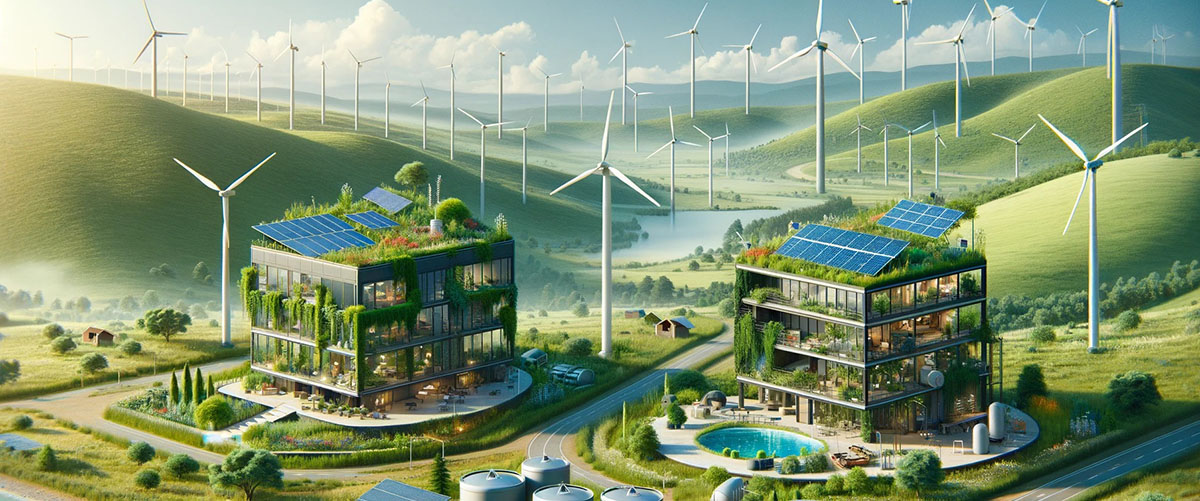
Fundamentals of smart resource management in buildings
Smart building management systems for resource optimization constitute the integrated set of hardware (sensors, actuators, controllers), software (BMS platforms, machine learning algorithms, digital twins) and communication protocols (BACnet, Modbus, KNX, MQTT) that monitor, analyze and adjust energy, water and material consumption in real time. According to the International Energy Agency (IEA, 2023), buildings account for 30% of global final energy consumption and 26% of energy-related CO₂ emissions, making resource optimization a top-tier climate priority. Data from the world's leading smart building platform, the EPA's Energy Star program, demonstrate that buildings with certified smart management systems consume 20% to 40% less energy than equivalent conventional buildings, with an average return on investment of 3 to 5 years for facilities exceeding 5,000 m². The global BMS (Building Management Systems) market reached 7.6 billion USD in 2023 and is projected to reach 14.2 billion by 2028, with a compound annual growth rate of 13.3% (MarketsandMarkets, 2023).
The technical architecture of these systems is organized into four functional layers: the perception layer (temperature, humidity, CO₂, illuminance, occupancy, water flow, and circuit-level electrical consumption sensors), the communication layer (wired networks such as BACnet IP or wireless networks such as LoRaWAN and Zigbee), the processing layer (edge servers or cloud platforms running predictive control algorithms) and the actuation layer (motorized valves, variable frequency drives, lighting regulators, irrigation solenoid valves). A 10,000 m² office building equipped with smart management typically integrates between 2,000 and 5,000 measurement points, generating between 50 and 200 GB of operational data annually. Standard ISO 52120-1:2022 establishes the efficiency classification for building automation and control systems across four classes (A, B, C, D), where class A (high energy efficiency) requires data-driven predictive control, zone-level regulation with resolution below 50 m², and continuous monitoring with automatic anomaly detection — conditions achievable only through fully integrated smart management systems.
Sensor technologies and control platforms in buildings
Advanced sensing constitutes the fundamental pillar of smart building management systems for resource optimization. Occupancy sensors based on PIR (passive infrared) technology combined with millimeter-wave radar (detection accuracy of 98%, spatial resolution of 0.5 m, unit cost of 80 to 150 EUR) enable HVAC and lighting adjustments to actual demand, avoiding energy waste in unoccupied zones that represents between 15% and 30% of total consumption in office buildings (Lawrence Berkeley National Laboratory, 2021). Indoor air quality sensors (CO₂: range 0-5,000 ppm with accuracy of ±30 ppm; PM2.5: range 0-500 µg/m³; TVOC: range 0-60 mg/m³) enable demand-controlled ventilation (DCV), which reduces HVAC system consumption by 25% to 50% compared to fixed-airflow ventilation while maintaining CO₂ levels below 800 ppm in accordance with ASHRAE 62.1-2022 recommendations. Smart water meters with 0.001 m³ resolution and real-time transmission detect leaks with a threshold of 0.5 liters per hour, enabling a 12% to 18% reduction in water waste in multi-family residential buildings.
Modern BMS platforms integrate these data sources through open protocols and offer control functionalities that transcend simple scheduled automation. Model Predictive Control (MPC) uses algorithms that anticipate thermal demand for the next 24 to 72 hours by combining weather data (outdoor temperature, solar radiation, wind speed), occupancy data (calendars, historical patterns, room bookings) and building thermal models (envelope resistance and capacitance). Documented studies across more than 40 commercial buildings demonstrate that MPC reduces HVAC consumption by 15% to 30% compared to conventional schedule-based control (Drgoňa et al., 2020). Market-leading platforms such as Siemens Desigo CC, Honeywell Forge and Johnson Controls Metasys manage buildings of up to 250,000 m² with response times below 2 seconds per control point. Integration with digital twins enables simulation of optimization scenarios before implementation: a digital twin of The Edge building (Amsterdam, 28,000 m², BREEAM Outstanding certification with 98.4%) processes 28,000 real-time sensor data points and has contributed to reducing energy consumption to 70 kWh/m² per year, 70% below the Dutch office average.
Water and energy consumption optimization through intelligent algorithms
Water optimization through smart management systems spans three domains: loss detection and elimination, demand regulation, and integrated water cycle management within the building. Leak detection algorithms based on machine learning analyze hourly consumption patterns (nighttime flow, usage event duration, occupancy correlation) and identify anomalies with a sensitivity of 95% and a false positive rate below 3% (Mounce et al., 2021). In commercial buildings with more than 500 users, implementing electronic faucets with adaptive flow control (4 to 8 liters per minute depending on detected activity) and toilets with smart dual flush (3 and 6 liters, automatic selection via weight sensor) reduces potable water consumption by 30% to 45% compared to conventional fixtures. Smart rainwater management through controlled retention systems (tanks of 5 to 50 m³ with solenoid valves managed by 48-hour weather forecasts) optimizes harvesting for irrigation and non-potable uses, achieving potable water substitution rates of 20% to 35% in buildings with roof areas exceeding 1,000 m².
In the energy domain, intelligent algorithms operate across multiple time scales. At the minute scale, DALI (Digital Addressable Lighting Interface) lighting control with illuminance and presence sensors adjusts light intensity by zone (resolution of 1 to 4 luminaires), maintaining the 500 lux recommended by standard EN 12464-1 on the work plane while reducing lighting consumption by 40% to 60% compared to unregulated lighting. At the hourly scale, demand response algorithms shift flexible loads (electric vehicle charging, domestic hot water production, thermal pre-conditioning) to periods of lower tariff cost or higher photovoltaic production, generating savings of 8% to 15% on the electricity bill. At the daily and seasonal scale, predictive maintenance algorithms analyze vibration, temperature and consumption data from HVAC equipment to anticipate failures with an average lead time of 14 to 21 days, reducing unplanned downtime by 35% and extending equipment service life by 10% to 20% (Bouabdallaoui et al., 2021). The Pixel building (Melbourne, Green Star certification with 105 points, the first to achieve carbon neutrality in Australia) integrates these strategies to achieve net-zero energy consumption with a rooftop photovoltaic installation of 48 kWp and a management system that optimizes self-consumption up to 85%.
Documented case studies and future outlook for smart building management
Quantified results from buildings with smart management systems confirm the technical and economic viability of these solutions. The European QUANTUM program (Quality Management for Urban Energy Performance) monitored 68 buildings in Germany over 3 years and documented average energy savings of 19% without additional hardware investment, solely through optimization of existing control parameters and correction of operational errors detected by the algorithms. The BEMS-HVAC project by the Building Research Establishment (BRE, United Kingdom) demonstrated across 22 office buildings that intelligent reconfiguration of HVAC systems reduces consumption by 10% to 30%, at an implementation cost of 2 to 5 EUR/m² and a return on investment under 18 months. At the urban scale, the Aspern Seestadt smart district (Vienna, 240 hectares, 8,500 planned dwellings) integrates a centralized platform managing distributed photovoltaic generation (25 MWp installed), community heat pumps and battery storage, achieving a 50% emissions reduction compared to baseline levels.
The outlook for smart building management systems points toward three converging directions. The first is the integration of generative artificial intelligence for building user interaction: assistants that translate comfort requests into optimized control actions while explaining the energy consequences of each option. The second is district-scale interoperability through urban data platforms (FIWARE standard) that enable energy, water and data exchange between neighboring buildings, multiplying optimization possibilities. The third is integration with smart grids through the OpenADR 2.0 standard, which allows buildings to participate in energy flexibility markets: the building offers demand reduction or battery injection in exchange for compensation of 50 to 200 EUR/MWh, generating annual revenue of 1 to 5 EUR/m² that improves the return on investment. The horizon is the autonomous building: a structure that intelligently manages its resources, produces more energy than it consumes, recycles its water and generates revenue in energy markets — an objective that available data place within reach of current technology with a construction premium of 8% to 15% over conventional costs.
References
- [1]Buildings — Tracking Clean Energy ProgressInternational Energy Agency.
- [2]All You Need to Know about Model Predictive Control for BuildingsAnnual Reviews in Control, 50, 190-232.
- [3]Occupancy-Based Control Strategies for Energy Savings in Commercial BuildingsU.S. Department of Energy, LBNL Report.
- [4]Predictive Maintenance in Building Facilities: A Machine Learning-Based ApproachSensors, 21(4), 1044.
- [5]Machine Learning for Automated Detection of Water Network LeakageWater Research, 195, 116977.
- [6]Building Management System Market — Global Forecast to 2028MarketsandMarkets Research Pvt. Ltd..


Comments 0
No comments yet. Be the first!
Leave a comment