The quantified debate: geographic proximity and carbon footprint
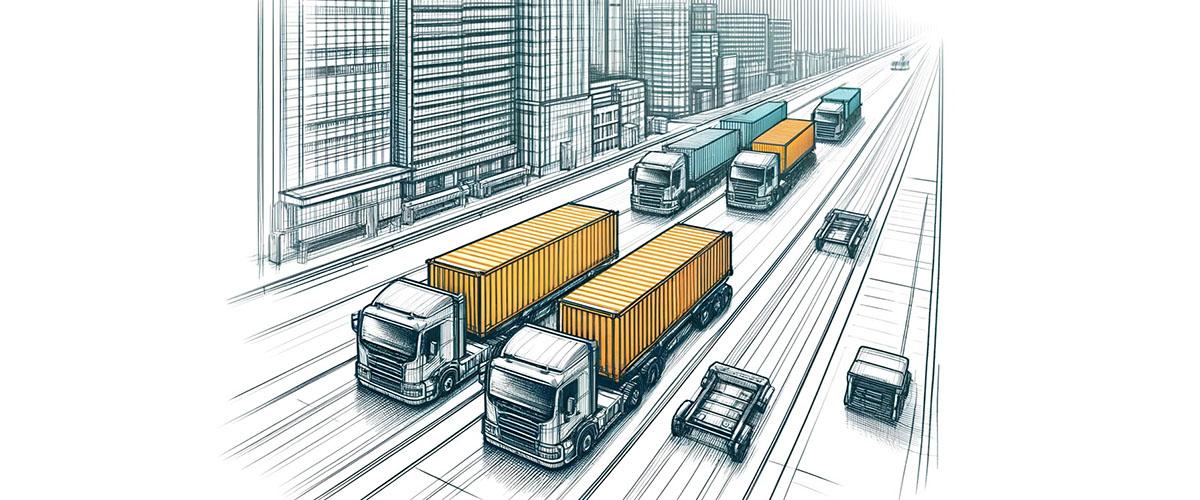
The choice between Local Materials and Imported Materials is not an ideological question but a technical one, measurable through life cycle assessment (LCA) indicators. Module A4 of the standard EN 15978:2011 (environmental assessment of buildings) specifically quantifies transport emissions from factory to site. Data from the ICE database (Inventory of Carbon and Energy, University of Bath) show that road transport emits 0.06-0.15 kgCO2/t-km, rail emits 0.02-0.04 kgCO2/t-km, and maritime transport emits 0.008-0.020 kgCO2/t-km. For a heavy material such as aggregate (density 1,500-1,800 kg/m3), transporting 1 tonne over 500 km by road generates 30-75 kgCO2, whereas sourcing it from 30 km away generates only 1.8-4.5 kgCO2 — a difference of 94-97%. These stark transport-emission differentials explain why heavy, low-value materials such as aggregates, sand, and common stone are almost universally sourced locally, while the debate concentrates on medium-weight materials where the trade-off between manufacturing efficiency and transport distance is less straightforward.
However, distance is not the sole determining factor. A locally produced material with a carbon-intensive manufacturing process can generate more total emissions than an imported material produced efficiently. A ceramic brick manufactured in an efficient tunnel kiln 2,000 km away (module A1-A3: 0.20 kgCO2/kg, module A4: 0.12-0.30 kgCO2/kg, total 0.32-0.50) may achieve a better balance than a brick from a local intermittent kiln (module A1-A3: 0.40-0.60 kgCO2/kg, module A4: 0.01-0.02 kgCO2/kg, total 0.41-0.62). The Environmental Product Declaration (EPD) according to EN 15804+A2 enables precise comparisons by integrating all life cycle modules. In the EU, more than 12,000 EPDs are registered on the ECO Platform (2024), facilitating objective comparisons between local and imported materials. This growing EPD ecosystem means that designers now have access to verified, third-party-audited environmental data for the majority of commonly specified construction products, removing much of the guesswork from sourcing decisions.
Economic impact: regional employment versus economies of scale
Local materials generate a multiplier effect within the regional economy. According to the New Economics Foundation (NEF, 2002), every euro spent with local suppliers generates 1.76 EUR of economic activity in the region (local multiplier or LM3), compared with 1.36 EUR when spent with non-local suppliers. In the Spanish construction sector, ANEFA (National Association of Aggregate Manufacturers) estimates that the 1,600 active quarries generate 35,000 direct jobs distributed across the territory, and that 85% of aggregates are consumed within 50 km of the source quarry. The local added value of a proximity aggregate includes: employment in extraction, processing, short-distance transport, and municipal taxes (exploitation royalties). This pattern repeats across construction material sectors worldwide: local brick yards, regional sawmills, and nearby concrete batching plants form the economic backbone of many rural and peri-urban communities, and procurement decisions by construction firms directly determine the viability of these enterprises.
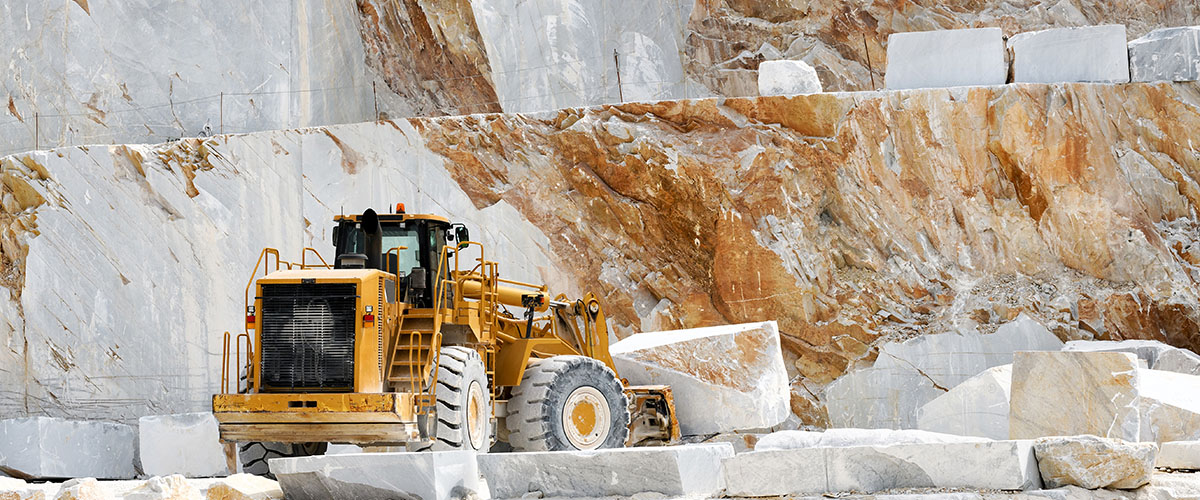
Imported materials offer advantages of economies of scale and access to products not available locally. Italian natural stone (Carrara marble, 150-300 EUR/m2), Brazilian granite (40-120 EUR/m2), or FSC-certified tropical hardwood (800-2,500 EUR/m3) have no local equivalent in many regions and are imported out of technical or aesthetic necessity. Spain imported construction materials worth 8.7 billion euros in 2022 (Eurostat, 2023), principally steel (2.1 billion EUR), timber (1.4 billion EUR), ceramics (900 million EUR), and natural stone (600 million EUR). The optimal balance is neither 100% local nor 100% imported, but an informed decision guided by LCA that prioritises local sourcing when the environmental balance is favourable and accepts imports when quality or availability requires it. International trade in construction materials will persist, but the trajectory is toward greater transparency about the environmental cost of every kilometre a material travels.
Certifications and credits: incentives for local sourcing
Sustainable building certification systems explicitly incentivise the use of local materials. LEED v4.1 awards up to 2 points under credit MRc5 (Building Product Disclosure and Optimization — Sourcing of Raw Materials) for using products extracted, processed, and manufactured within a radius of 160 km (100 miles) of the project site, with a minimum of 20% of material cost. BREEAM awards credits under the category Mat 01 (Environmental Impacts from Construction Products) that favour materials with a lower transport footprint documented through EPDs. The DGNB (German) certification includes the indicator ENV1.2 (Local Environmental Impact), which quantifies transport emissions and weights them in the overall score. These three certification systems collectively cover the vast majority of certified green buildings worldwide, meaning that local sourcing is rewarded not only in theory but in the competitive marketplace where certified buildings command rental and sale premiums of 5-15% over conventional equivalents.
In Spain, the Structural Code (Royal Decree 470/2021) includes Annex 22 on sustainability, which recommends considering transport distance as a material selection criterion. The Spain Circular 2030 Strategy (MITERD, 2020) promotes the prioritisation of proximity materials as part of the circular economy. At the European level, Level(s) (the European Commission's sustainability indicator framework) includes indicator 1.2 (Global Warming Potential — Life Cycle), which accounts for module A4, thereby incentivising the reduction of transport distances. The regulatory trajectory is clear: the upcoming revision of the Construction Products Regulation (CPR) will include requirements for information on transport distance and logistical emissions in the declaration of performance for each product. This regulatory convergence across national codes, voluntary certification schemes, and EU-level frameworks signals that transport-related carbon will increasingly become a non-negotiable element of material specification, moving from a voluntary bonus to a mandatory disclosure.
Sourcing strategies: the intelligent proximity model
The concept of km0 materials — inspired by the proximity gastronomy movement — is being adapted to construction with a pragmatic approach: prioritise local sourcing for high-volume, low-value materials (aggregates, earth, stone: 80-95% of a building's weight), and accept importation for low-volume, high-value materials (specialist installations, distinctive finishes: 5-20% of the weight). A study by Morel et al. (2001) demonstrated that dwellings constructed with local earth (rammed earth, compressed earth blocks) and regional timber reduce embodied transport energy by 85-95% compared with conventional housing built with imported industrial materials. This finding has been replicated in contexts as diverse as sub-Saharan Africa, South Asia, and southern Europe, confirming that the transport-energy savings of earth construction are robust across climatic zones and construction traditions.
Verified proximity sourcing strategies include: local resource mapping (inventory of quarries, sawmills, factories, and recycling centres within a radius of 50-200 km), open specification (prescribing performance rather than brand names, allowing the contractor to select the nearest supplier that meets requirements), local earth and stone modules (using materials excavated on the project site itself or from nearby sites: the Ricola Krauterzentrum project by Herzog & de Meuron used 600 m3 of earth from the site itself), and locally managed timber (in Spain, the wooded forest area covers 18.4 million hectares with harvesting below 40% of annual growth, according to the National Forest Inventory). The balance between Local Materials and Imported Materials is decided case by case, with LCA data rather than dogma: local is preferable when it is environmentally and technically equivalent, and imported is justified when it delivers a net benefit in quality, durability, or performance that compensates for its greater logistical footprint.
References
- [1]Inventory of Carbon and Energy (ICE) Version 2.0University of Bath / BSRIA. ISBN: 978-0-86022-703-8
- [2]EN 15978:2011 — Sustainability of construction works — Assessment of environmental performance of buildings — Calculation methodEuropean Committee for Standardization.
- [3]Informe Estadístico Anual 2022: Sector de Áridos en España — Transporte y LogísticaAsociación Nacional de Empresas Fabricantes de Áridos.
- [4]Building houses with local materials: means to drastically reduce the environmental impact of constructionBuilding and Environment, 36(10), 1119-1126.
- [5]The Money Trail: Measuring Your Impact on the Local Economy Using LM3NEF / The Countryside Agency. ISBN: 1-899407-42-0
- [6]España Circular 2030: Estrategia Española de Economía CircularMinisterio para la Transición Ecológica y el Reto Demográfico.


Comments 0
No comments yet. Be the first!
Leave a comment